Learning, creating, and using knowledge: Concept maps as facilitative tools in schools and corporations
| Novak, J. D. (2010). Learning, creating, and using knowledge: Concept maps as facilitative tools in schools and corporations. Taylor \& Francis. |
BibTex
BibTex
@book{novak2010learning,
author = {Novak, Joseph D.},
date-added = {2011-12-20 16:25:58 +0000},
date-modified = {2012-04-04 19:53:49 +0000},
publisher = {Taylor \& Francis},
read = {1},
title = {Learning, creating, and using knowledge: Concept maps as facilitative tools in schools and corporations},
year = {2010}
}
Links here
Kindle highlights
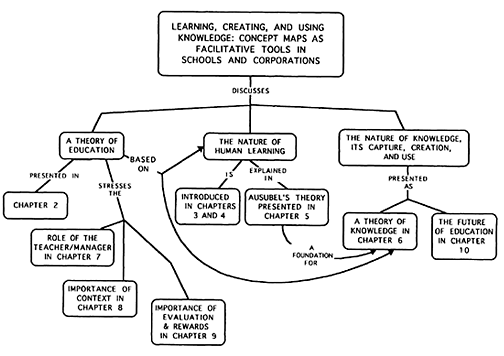
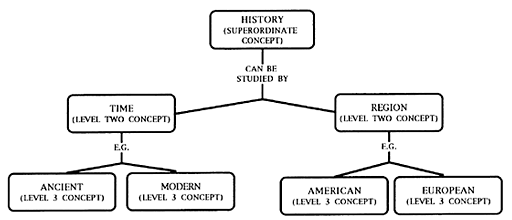
Concept maps should be read from the top to the bottom, proceeding from the higher order—more general—concepts at the top to the lower order—more specific—concepts at the bottom. (loc: 316-17)
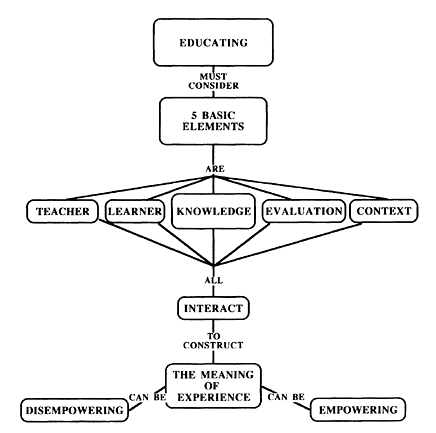
There are five elements in my theory of education, each of which interacts with all the others, and all must be considered simultaneously to create a powerful educational event. The five elements presented are: (1) learner; (2) teacher; (3) knowledge; (4) context; and (5) evaluation. (loc: 324-25)
My thesis in this book is the same as it was in my earlier book, A Theory of Education (Novak, 1977a): Education, in any setting, is an enormously complex human endeavor; there are more ways to make changes that will be harmful or of little value than ways to make constructive improvements in education. A comprehensive theory of education is needed to give vision and guidance for new practices and research leading to steady improvement of education. The ideas in this book should apply to all educational settings, including schools, universities, corporations, technology-mediated education, and nonformal education, such as museums or hobbies. (loc: 407-11)
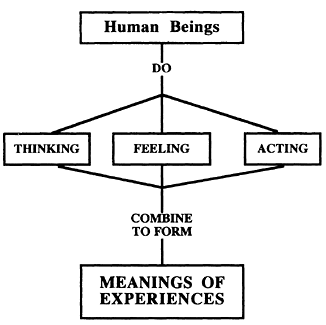
I will claim that the central purpose of education is to empower learners to take charge of their own meaning making. Meaning making involves thinking, feeling, and acting, and all three of these aspects must be integrated for significant new learning, and especially in new knowledge creation. (loc: 427-29)
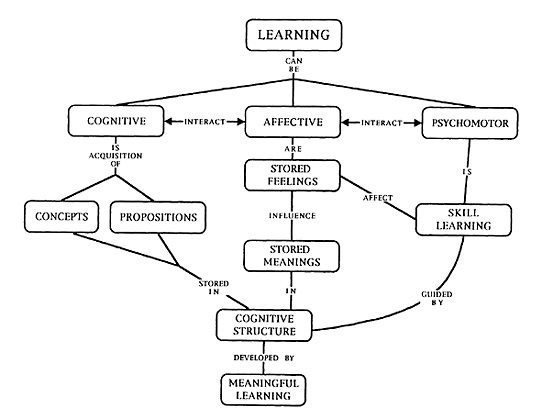
Successful education must focus on more than the learner's thinking. Feelings and actions are also important. We must deal with all three forms of learning. These are acquisition of knowledge (cognitive learning), change in emotions or feelings (affective learning), and gain in physical or motor actions or performance (psychomotor learning) that enhance a person's capacity to make sense out of their experiences. (loc: 439-42)
In 1973, Joseph Schwab proposed that education involved what he called “four commonplaces” (p. 502–503). His commonplaces were learner, teachers, subject matter, and milieus. Each commonplace was necessary to consider and could not be reduced into one of the others (analogous to finding the lowest common denominator in fractions). (loc: 449-51)
My five elements are: (a) learner, (b) teacher, © knowledge, (d) context, and (e) evaluation. (loc: 458)
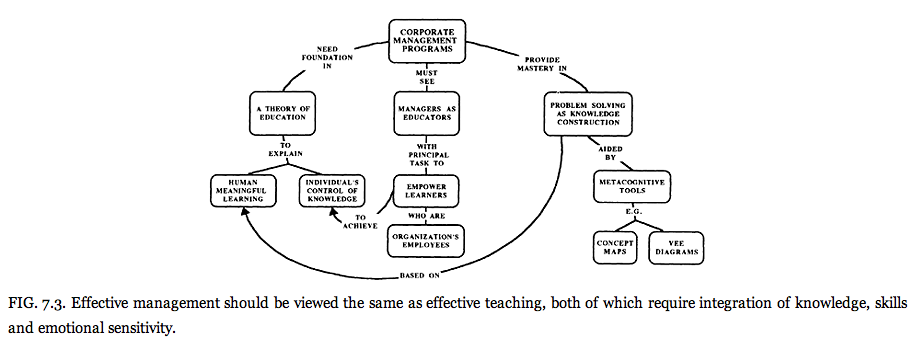
Strategies for developing and using concept maps have been described in numerous publications and in Learning How To Learn (Novak & Gowin, 1984). As we shall see, concept maps and Vee diagrams can also be powerful tools to aid learning as well as tools for evaluation. (loc: 464-65)
In schooling, work, or any educational setting where we have a teacher, even if it is a textbook or a computer program serving as a proxy for a teacher, we must recognize that the learner's world and the teacher's world are never the same. (loc: 498-500)
Any educational event is a shared action to seek to exchange meanings and feelings between the learner and the teacher. This exchange or negotiation will be emotionally positive and intellectually constructive when learners gain in their understandings of a segment of knowledge or experience; conversely, it will be negative or destructive when understanding is obfuscated or feelings of inadequacy emerge. And because learner and mentor share thoughts, feelings, and actions, the teacher will also experience positive feelings and a sense of power over knowledge when the educative event is successful. When learner and teacher are successful in negotiating and sharing the meaning on a unit of knowledge, meaningful learning occurs. In its simplest form, my theory of education states: Meaningful learning underlies the constructive integration of thinking, feeling, and acting leading to human empowerment for commitment and responsibility. (loc: 507-13)
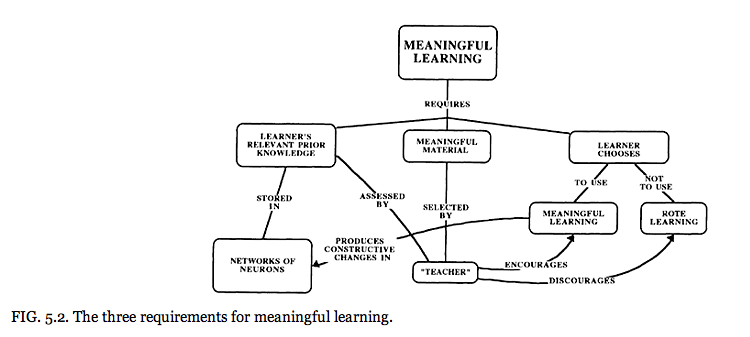
Meaningful learning has three requirements: 1. Relevant prior knowledge: That is, the learner must know some information that relates to the new information to be learned in some nontrivial way. 2. Meaningful material: That is, the knowledge to be learned must be relevant to other knowledge and must contain significant concepts and propositions. 3. The learner must choose to learn meaningfully. That is, the learner must consciously and deliberately choose to relate new knowledge to knowledge the learner already knows in some nontrivial way. (loc: 609-15)
FACTS, CONCEPTS, PROPOSITIONS, AND PRINCIPLES: COMPONENTS OF KNOWLEDGE (loc: 629)
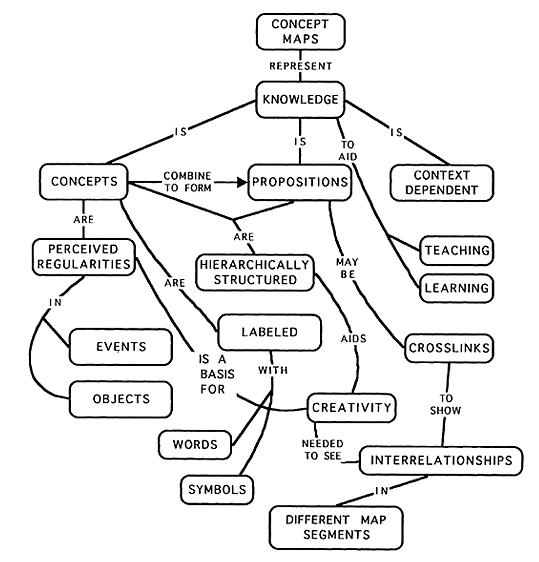
The labels represent concepts, which I define as perceived regularities in events or objects, or records of events or objects, designated by a label (Fig. 3.3). (loc: 636-37)
Principles are relationships between concepts. Principles tell us how events or objects work or how they are structured. (loc: 652-53)
Our knowledge storage system consists of at least three parts: (a) sensory or perceptual (PM) memory; (b) short-term or working memory (STM); and © long-term or permanent memory (LTM). Each of these memory systems depends on the others, and what is stored in LTM strongly influences what will be perceived, how it will be processed in STM, and finally how it will be stored in LTM. (loc: 662-65)
Simon (1974) asked, “How big is a chunk?” Simon's answer was basically that the size of a chunk depends on the knowledge you have in long-term memory. This has been confirmed by numerous studies including my own work. For example, people who recognize numbers as symbols can remember FIG. 3.4. A representation of the three memory systems involved in learning. Note that each system interacts with the other, both limiting and facilitating the acquisition of information. From Novak, 1980. Copyright © 1980 by the National Association of Biology Teachers. six to eight numbers after a short (5 to 10 second) exposure to a list. The learning time must be long enough to perceive the material through sensory memory, but not long enough to rehearse or repeat the information, until it is set into long-term memory. The same is true for letters, but often letters can be chunked as words or word-like units, and hence 9 or 10 letters might be recalled after a short exposure. In my work, I find that the letters Q C V M E P Y T O are often chunked by people as Q, C, V, Me, Pyto, and all 10 letters can be recalled. Familiar words may contain several letters but each word is a psychological chunk, and five to nine words may be recalled after a short exposure. Very familiar strings of words can also be processed as single chunks. For example each of the following statements could be a chunk: Jack and Jill went up the hill; to be or not to be, that is the question; pi is equal to the circumference divided by the diameter; profit is equal to the price minus the costs. If all of these statements are already well-known by you, you could easily recall all four after a quick reading because they would represent only four chunks in your short-term or working memory. Most people would not have stored in their long-term memory easily recallable meanings for all of these statements, and hence most would have difficulty recalling all four statements after a single quick reading. Certainly every reader has had the experience of listening to a lecture where all of the words used by the speaker were familiar, but when presented rapidly, especially when long sentences are used, the meanings of the sentences cannot be processed in STM and the lecture is incomprehensible. (loc: 675-92)
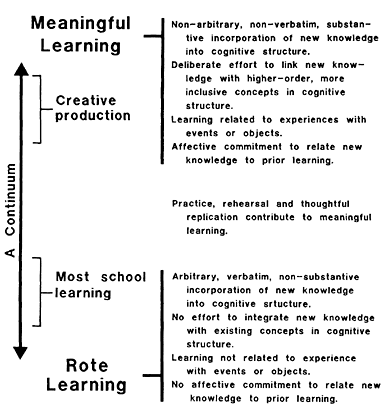
to Fig. 3.1. Highly meaningful learning that includes novel problem solving and creativity is only possible in domains of knowledge where the learner has considerable, well-organized prior knowledge. Thoughtful practice or rehearsal also contribute. (loc: 696-98)
CONCEPT MAPS AND KNOWLEDGE ORGANIZATION During the early 1970s, my research program struggled with the problem of making records of what children know about a domain of knowledge before and after instruction. I tried every conceivable form of paper and pencil test and found that these poorly represented the children's knowledge. Interviewing children on how or why they selected their answers showed that many chose the right answer for the wrong reasons and most knew either more or less about the subject than the test question answers indicated. We moved to the use almost exclusively of interviews patterned after the work of Jean Piaget (Pines, Novak, Posner, & Vankirk, 1978), but then we were faced with numerous audio tapes or typed transcripts of these tapes. It was exceedingly difficult to analyze these records and find patterns or regularities that could help us understand how and why children were learning or failing to learn the new subject matter. Working from Ausubel's (1963, 1968) theory of meaningful learning, we decided to examine interview transcripts for concept words and propositions given by the students, for these would indicate prior knowledge and postinstruction knowledge. After trying several ways to organize the concept words and propositions, my research group came up with the idea of concept mapping. (loc: 741-51)
how abt things that can be categorized in different ways. for ex sports. divide by no of players. outdoors indoors. region. tools. etc. which is oerarching organizing pinciple. (loc: 770)
Learning How to Learn (Novak & Gowin, 1984), (loc: 785)
Our research, and more recent studies by many others in countries all over the world, has shown that young children learn quickly how to make good concept maps, whereas secondary school or university students often have difficulty, partly as a result of years of habit with rote learning (Novak & Wandersee, 1990). (loc: 781-83)
We have also found that to benefit from concept maps presented in text or lectures, learners needed to construct their own maps and learn this method of organizing their own knowledge. (loc: 783-85)
At the present time, most education takes place in some organizational setting. (loc: 821-22)
most ed but not most learning. isnt this dep on def of ed. (loc: 822)
From infancy onward, healthy human experience is a constant search for meaning. (loc: 840-41)
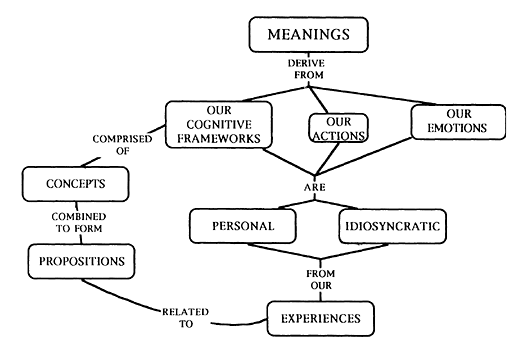
The meaning of an event or object depends on what we already know about that kind of event or object. School, work, joy, and fear are labels for regularities in experience, but their meanings may be radically different depending on a person's experience. Meaning, to a person, is always a function of how he or she has experienced the combination of thinking, feeling, and acting throughout life experiences. How humans choose to act depends on how they think and feel about an object or event to which they relate. School, work, joy, and fear involve experiences that can lead to radically different meanings to children growing up in radically different environments. It is evident that the context of experience has an important impact on the meaning of an experience. (loc: 849-54)
Each of us has had a unique sequence of experiences, hence each of us has constructed our own idiosyncratic meanings. However, there is sufficient commonality in our meanings that we can use common language labels to share, compare, and modify (loc: 856-57)
Each of us has had a unique sequence of experiences, hence each of us has constructed our own idiosyncratic meanings. However, there is sufficient commonality in our meanings that we can use common language labels to share, compare, and modify meanings. (loc: 856-57)
One of the issues in the psychology of FIG. 4.1. The meanings we hold are a product of our idiosyncratic sequence of experiences and hence vary, at least to some degree, between all people. concept learning has been which comes first, the perception of the regularity or the acquisition of the label? (loc: 866-70)
Piaget in his numerous writings argued that the perception of the regularity must come first, and this was dependent on the cognitive developmental stage of the learner (Wallace, 1976). Vygotsky (1962), on the other hand, held that the availability of a label for a concept can be helpful in acquisition of the concept. For example, if we suggest to a child that dogs, cats, and lions are all carnivores, the child may inquire further as to what other animals are or are not carnivores, thus accelerating acquisition of the concept. Some persons will never acquire a word to represent this concept. (loc: 870-74)
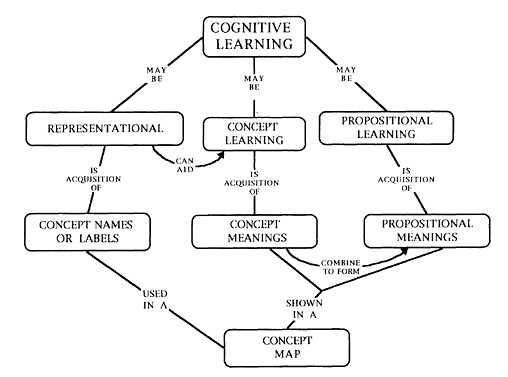
Representational learning is a form of meaningful learning where the learner recognizes a word, sign, or symbol as a label for a specific object or event or category of events or objects. (loc: 880-81)
Representational learning may preceed concept learning, where a label is learned before the generic attributes or regularities in events or objects are recognized (Ausubel, 1968). (loc: 882-83)
Learning the vocabulary used in a new field of study frequently involves much representational learning, but the full conceptual meaning of technical vocabulary may take years, and for some students little more than representational meaning may be achieved. (loc: 888-89)
concept maps can be enormously useful to teachers, administrators, and learners to move toward sharing the same concept meanings for the words or symbols presented. They can also be helpful to move the learner from mere representational meaning to richer conceptual meaning. (loc: 909-11)
Propositions are two or more words combined to form a statement about an event, object, or idea. Propositions can be valid (e.g., the sky appears blue), invalid (e.g., Paris is the capital of England) or nonsensical (e.g., the door looked). (loc: 917-19)
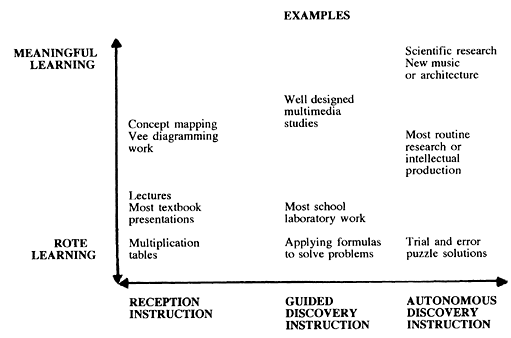
The meaning we acquire for a given concept is formed from the composite of propositions we know that contain that concept. The richness of meaning we have for a concept increases exponentially with the number of valid propositions we learn that relate that concept to other concepts. This is one reason why we represent learning on a continuum (see Fig. 3.1), where rote learning may be no more than verbatim memorization of a concept definition, whereas meaningful learning can involve relating new concepts through valid propositions for a person's lifetime. (loc: 926-30)
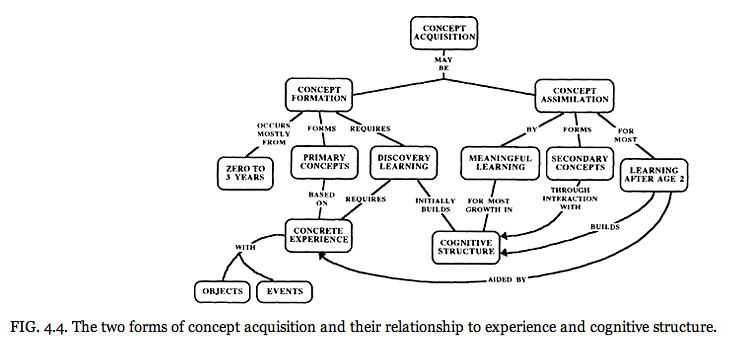
Ausubel (1968) distinguished between primary concepts and secondary concepts. Primary concepts are formed by young children by directly observing objects or events and recognizing regularity in these in the hypothesis testing phase of concept formation and subsequent incorporation of concepts into cognitive structure. Dog, mom, growing, and eating are examples of primary concepts formed by young children. As the child builds cognitive structure, he or she can acquire secondary concepts by the process of concept assimilation. Here concepts and propositions in the child's cognitive structure function to acquire new concept meanings including concepts that have no visible exemplars such as molecule, love, and history. By school age, almost all concept learning is concept assimilation. (loc: 952-58)
Piaget's PhD degree dealt with the phylogeny of mollusks (snail and clam types), (loc: 1009)
Piaget (1926) proposed that children undergo four major developmental stages. The first he called the sensory-motor stage (ages 0 to 2 years), during which time most of the child's development is primarily physical. During the sensory-motor stage, according to Piaget, the child comes to recognize, among other things, that objects do not disappear when they are moved out of sight. This cognitive capacity to recognize the permanence of objects is a key characteristic of the end of this Piagetian stage. During the age period 2 to 7, children move through what Piaget called the preoperational stage. This stage is characterized by the child's egocentric view of objects and events in the world and their inability to decenter, that is to see an object or an event from a perspective other than their own. For example, when a liquid is poured from a short, wide container into a tall, narrow container, the child will frequently say that the tall container contains more liquid. The child fails to decenter from the height dimension and thus erroneously concludes that the tall container holds more liquid. Piaget's third developmental stage occurs between the ages of 7 to 11. In this concrete operations stage, the child can decenter and recognize, for example, that the taller vessel is also narrower and that no liquid was lost in the transfer from the short, wide container. However, these cognitive operations require concrete, visible props and the child cannot reason hypothetically to recognize that any form of a container will not alter the amount of substance when it is transferred from one container to another. The final cognitive developmental stage Piaget described is the formal operational stage, roughly from age 11 or 12 onward. In this stage, the child (or adult) can make inferences or predictions in hypothetical cases as well as for concrete events or objects observed. For example, a child could predict that a given amount of liquid or sand poured into cylinders of varying diameters will be higher or lower in a ratio inversely proportional to the diameter of the cylinder. Formal operational subjects can control variables and predict that a pendulum bob on a long string will move back and forth more slowly than a bob on a short string and that the weight of the bob makes no difference. (loc: 1012-29)
Ausubel's (1963) The Psychology of Meaningful Verbal Learning, (loc: 1056-57)
Wittrock (1974), a former student of Ausubel's, (loc: 1060)
Ausubel's theory addresses primarily cognitive learning, or the acquisition and use of knowledge. (loc: 1147-48)
The central idea in Ausubel's theory is what he describes as meaningful learning. To Ausubel, meaningful learning is a process in which new information is related to an existing relevant aspect of an individual's knowledge structure. However, the learner must choose to do this. (loc: 1154-56)
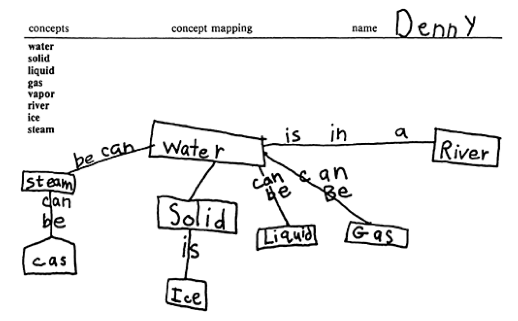
For example, a teacher or book could define, “vapor: water in the form of an invisible gas.” If Denny chose to learn the concept meaningfully, he would need to relate the meaning of vapor to concepts and propositions he already knows in a substantive, nonarbitrary, nonverbatim manner. (loc: 1179-80)
Because it is patently obvious that children in school settings could not discover the concepts and principles constructed by geniuses in various fields over the past few centuries, it was not surprising that the emphasis on learning by discovery soon led to disenchantment with this approach by teachers and the public. Even under the best of circumstances, and with considerable guidance, only the more able students were demonstrating significant achievement. (See, e.g., Shulman & Keislar, 1966.) Instruction emphasizing discovery learning began to disappear in schools, albeit most schools and teachers never embraced this approach. What was needed in the 1960s, and what I believe is needed today, is not more emphasis on discovery learning, but rather more emphasis on meaningful learning. (loc: 1207-13)
In the course of meaningful learning, new information is linked with concepts in cognitive structure. Usually this linkage occurs when more specific, less inclusive concepts are linked to more general existing concepts in cognitive structure. (loc: 1238-39)
A subsuming concept is not a kind of mental fly paper to which information is stuck; the role of a subsuming concept in meaningful learning is an interactive one, facilitating movement of relevant information through the perceptual barriers and providing a base for linkage between newly perceived information and previously acquired knowledge. Furthermore, in the course of this linkage, the subsuming concept becomes slightly modified, and the stored information is also altered somewhat. It is this interactive process between newly learned material and existing concepts (subsumers) that is at the core of Ausubel's assimilation theory of learning. (loc: 1241-45)
If, at a later date, Denny obliteratively subsumes vapor as a concept (that is, he can no longer give a good description of the regularity represented by this label), his concept of water and steam would still be modified and probably enhanced as compared with the meanings Denny had before learning about vapor. (loc: 1249-51)
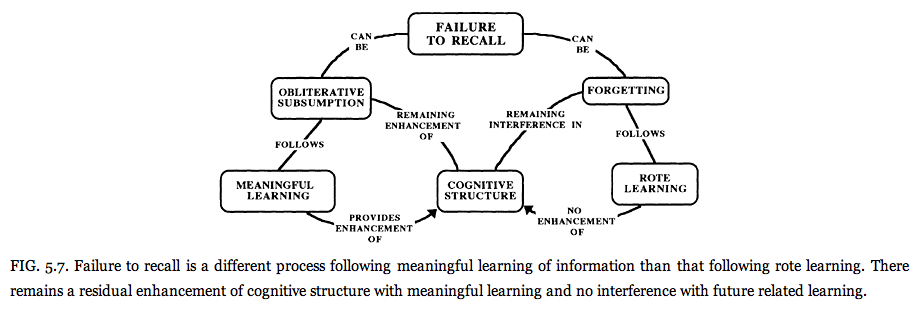
FORGETTING CONTRASTED WITH OBLITERATIVE SUBSUMPTION Most information we learn cannot be recalled at some time in the future. Although the debate continues as to whether the biological mechanisms accounting for forgetting result in physical destruction of stored memory traces, or whether forgetting is purely a psychological phenomenon, for purposes of education the fact that information becomes irretrievable some time after learning is of primary concern. Most careful research on retention has been done in laboratories where subjects are given nonsense syllables or word pairs to memorize and are then tested for later rote recall of information. Some studies have used poetry, story passages, and ordinary school materials for analysis of retention. These studies show that substantial forgetting occurs in a matter of hours for nonsense syllables; for poetry and story passages, much is lost in a matter of days; and for science, history, or other classroom information, retention drops to a fraction of original learning in a matter of weeks. Some information, however, is retained for months or years, especially information that has been rehearsed extensively. Forgetting has both an everyday meaning (i.e., a failure to recall something) and a specific technical meaning (i.e., the kind of failure to recall after rote learning). Figure 5.7 shows the relationships between forgetting and obliterative subsumption. In Ausubel's theory, variation in amount of recall depends primarily on the degree of meaningfulness associated with the learning process. Information learned by rote (nonsense syllables and meaningless word pairs) cannot be anchored to major elements in cognitive structure and hence form a minimum linkage with it. Unless materials learned by rote are restudied repeatedly to achieve overlearning (continued study after error-free recall has been achieved), they cannot be recalled several hours or several days after learning. Information that is learned meaningfully (associated with subsumers in cognitive structure) can usually be recalled for weeks or months after acquisition. The process of subsumption results in (loc: 1254-70)
modification of the stored information, however. As a result, recalled information may appear in a form slightly different from that originally learned. In time, recalled information may take on more general attributes of the subsuming concept(s) into which it was assimilated, and after obliterative subsumption has occurred, the specific messages learned are no longer retrievable. Nevertheless, there remain enhanced ideas in cognitive structure that can facilitate future learning. For example, we found that students who took algebra in ninth grade did substantially better with later studies on vectors in a physics class, even though much of their specific knowledge from algebra was obiteratively subsumed (Gubrud & Novak, 1973). (loc: 1274-79)
subsumed information results in increased differentiation of subsumers, thus adding to the capacity for easier subsequent learning of related materials. (loc: 1286-87)
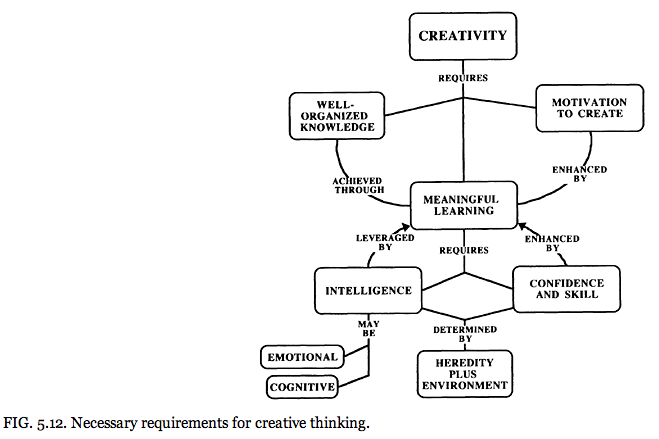
information learned meaningfully can be applied in a wide variety of new problems or contexts; the transferability of knowledge is high. It is this power for transferability that is necessary for creative thinking. (loc: 1289-91)
Laboratory studies have shown that information learned by rote inhibits subsequent learning of additional similar information (Suppes & Ginsberg, 1963). Even information learned by rote that is forgotten inhibits learning of similar new information. The reverse effect operates after meaningful learning. Although it is true that restudy or relearning of the same information is facilitated by prior retention in both rote and meaningful learning, the savings (as psychologists refer to this facilitation) in rote learning are only for relearning of precisely the same material, whereas meaningful learning will result in savings for relearning and facilitation (rather than inhibition) of learning new, similar (relevant to the same subsumer[s]) information. (loc: 1292-97)
Many students experience the feeling of being snowed under by the material of a course. Usually this feeling becomes most intense 6 to 8 weeks into a course. Some studies (see Hagerman, 1966)2 indicate that most information learned by rote in schools is lost within 6 to 8 weeks. As a result, students recognize that they have forgotten much of the information presented earlier and that their earlier learning is now lost and is interfering with new learning. They must force themselves either into review and meaningfully restudy earlier materials, cram for hours to overlearn earlier material, or give up hope of passing the course. (loc: 1298-1302)
As meaningful learning proceeds, development and elaboration of subsuming concepts necessarily occurs. The refinement of concept meanings in cognitive structure giving more precision and specificity to these concepts is called progressive differentiation of cognitive structure. Addition of new concepts through meaningful learning, or restructuring existing segments of cognitive structure, also produce progressive differentiation of the learner's cognitive structure. (loc: 1320-23)
In Ausubel's (1968) view, concept development proceeds best when the most general, most inclusive concepts are introduced first and then these concept are progressively differentiated in terms of detail and specificity. (loc: 1324-25)
INTEGRATIVE RECONCILIATION AND QUALITATIVE IMPROVEMENT OF CONCEPTUAL HIERARCHIES Subsumption and progressive differentiation lead to more than quantitative addition of knowledge to a conceptual framework. There are also qualitative changes in that each of the concepts in the relevant structure are modified in meaning to some extent. It is evident that as we subsume concepts into a mapped hierarchy, the meanings of all the concepts are modified at least slightly because there are meaningful connections vertically and horizontally across the structure. Neurologically, at least some new synapses would be forming between the neurons storing the new concept and neurons storing all previously learned, related concepts. Thus we see that both quantitative and qualitative changes in knowledge result from meaningful learning. (loc: 1350-56)
Another form of cognitive differentiation arises when new interrelationships are seen between concepts in cognitive structure, relationships we can represent as crosslinkages on a concept map. These crosslinkages represent what Ausubel, Novak, and Hanesian (1978) described as integrative reconciliations. (loc: 1358-60)
Piaget's developmental theory presents the concepts of assimilation, accommodation, and equilibration. To Piaget, assimilation occurs when new learning fits into a cognitive operational structure and requires no change in that structure. Accommodation occurs when new learning requires some modification of an operational structure, leading to a new equilibration of the structure. (loc: 1392-95)
Thus there are some similarities between Ausubel's ideas of subsumption, progressive differentiation, and integrative reconciliation and Piaget's ideas of assimilation, accommodation, and equilibration—in both cases these take place over time—but there is also one crucial difference. Piaget's cognitive developmental periods refer to general reasoning capacity, whereas my version3 of Ausubel's assimilation theory holds that reasoning capacity is primarily a function of the adequacy of the relevant conceptual framework a person has in a specific domain of knowledge. This is not to deny that older learners, in general, have better qualitative and quantitative knowledge frameworks for most domains of knowledge as compared with younger learners. However, as Chi (1983), Nussbaum and Novak (1976), Carey (1985), Papalia (1972), and others have demonstrated, young children can acquire large and complex knowledge frameworks in limited areas and their reasoning capacities in these areas may exceed that of many adults. (loc: 1397-1405)
superordinate learning is discovering a principle that integrates and explains many different concepts. like entropy in chemistry (loc: 1446)
Perkins (1992) also identified other factors that discourage what he calls complex cognition: Complex cognition has more intrinsic interest and promises more payoff outside of school and later in life. But consider the cost to learners: complex cognition demands much more effort. It creates greater risk of failure. It introduces the discomforts of disorientation, as learners struggle to get their heads around difficult ideas. Peer status for complex cognition is certainly mixed; who wants to be known as a “brain”? And very commonly, so far as grades and teacher approval go, complex cognition buys students no more than the simpler path of getting the facts straight and the algorithms right. No wonder, then, that students perfectly reasonably do not automatically gravitate toward complex cognition, (pp. 59–60) (loc: 1450-57)
Ausubel is perhaps best known for his idea of an advance organizer. In order to help learners bridge the gap between knowledge they already possess and new knowledge to be learned, Ausubel suggested that a small segment of instruction should be offered prior to the larger instructional unit that is more general and more abstract than the material in the larger unit. (loc: 1461-64)
metacognitive knowledge, including knowledge about how to learn meaningfully, is also crucially important. (loc: 1474)
To be effective, advance organizers must meet two requirements: (1) The learner's specific existing relevant conceptual and prepositional knowledge must be identified. And (2) appropriate organization and sequencing of new knowledge to be learned must be planned in such a way as to optimize the learner's ability to relate the new knowledge to the concepts and propositions already held. This is no easy task, partly because of the range of variation in and adequacy of various learners' relevant concepts and propositions. (loc: 1475-79)
ASSIMILATION, LEARNING, AND CONSTRUCTIVISM (loc: 1487-88)
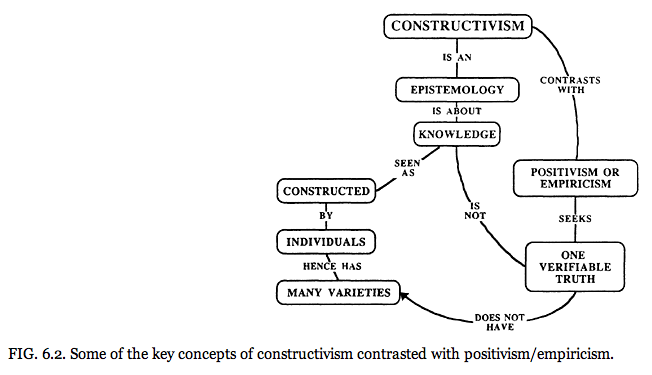
What is most commonly described is the fact that each learner must construct his or her own concepts or knowledge. Often there are no precise definitions of concept or knowledge. Many of the discussions fail to clarify how individuals construct knowledge (the psychology of learning) versus how scholars in disciplines construct new knowledge (the epistemology of knowledge). I deal with constructivism extensively in the next chapter and show how assimilation theory explains both individuals' knowledge construction and the growth of knowledge in discipline. (loc: 1489-93)
There are, of course, numerous other theories of learning that have been published since 1968. For example, Anderson's (1990) Adaptive Character of Thought, Sternberg's (1986) The Triarchic Mind, and Gardner's (1983) Frames of Mind, are widely cited in the literature. (loc: 1494-96)
The American Psychological Association's “Learner-Centered Psychological Principles” (Marshall & McCombs, 1995), (loc: 1499-1500)
My view is that creativity is simply successful integrative reconciliation or superordinate learning and the emotional desire to do this. (loc: 1511)
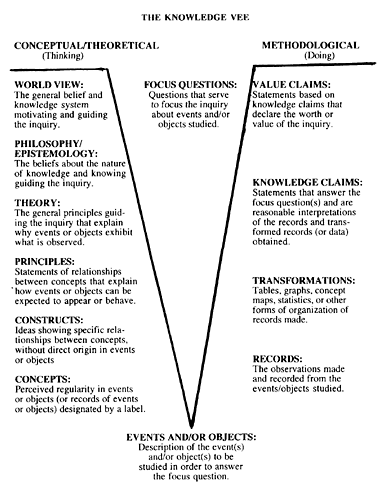
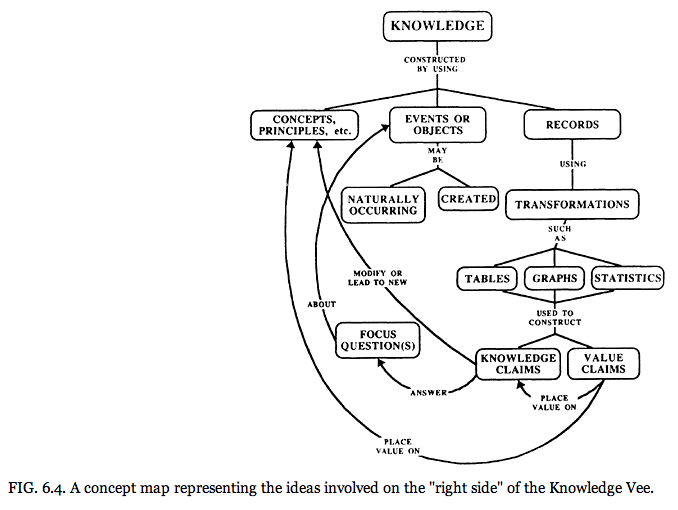
Gowin came up with the idea of the Knowledge Vee heuristic in early 1977. (loc: 1677-78)
Human constructivism is a label I see as appropriate both for the way in which humans learn their usable knowledge and also for the way in which they construct new knowledge. (loc: 1651-52)
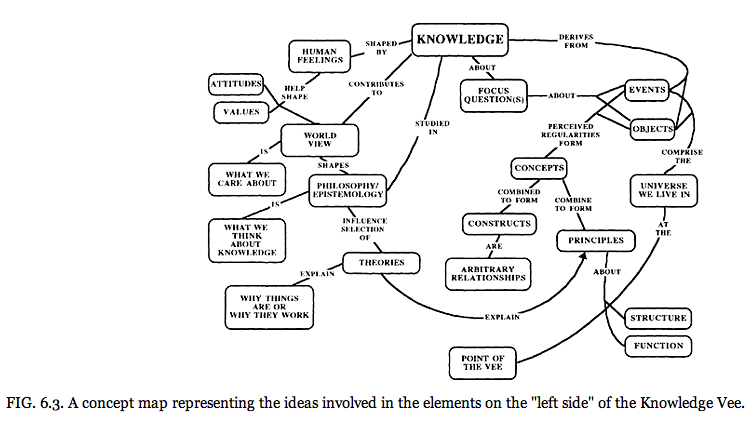
Halpern (1989) defined hypothetical constructs as concepts having no external reality, giving learning and memory as examples. This could also be said of atoms, love, and photosynthesis, but it seems much more coherent to label these as concepts, representing specific regularities in events or objects, albeit they may be observed indirectly. Constructs such as IQ are arbitrary relationships between concepts—there is no necessary reason to divide mental age by chronological age. Arbitrary constructs are more common in the social sciences. Constructs differ from principles because they do not explain how some aspects of the universe functions or is structured. (loc: 1765-69)
Piaget (1972) hinted at the idea that the ontogeny of knowledge acquired by an individual is constructed in a way that is similar to the phylogeny of knowledge produced by generations of scholars. (loc: 1936-38)
However, Piaget did not see learning as principally the acquisition of complex frameworks of concepts and propositions and hence his constructivist parallel between learning and knowledge creation was very different from what is illustrated in Fig. 6.6. (loc: 1938-39)
One of the ideas that grows out of the work of Toulmin (1972) is that knowledge is constantly evolving. We use current knowledge to design new inquiries and the product of these inquiries leads in time to new or modified concepts or principles, and more rarely, new theoretical or philosophical ideas. (loc: 1942-44)
In contrast to physics and biology, psychology and education have been characterized by innumerable principles and theories, each of which has at best a dubious interpretive value over a very narrow range of phenomena. The field of education has been strikingly devoid of parsimonious explanations. One reason for this, in my view, is that educators have relied too heavily on psychologists for principles and theories. Most of the research done by psychologists has been what Niesser (personal communication) called white lab coat psychology, done in the laboratory, usually with animals, and of almost no relevance to human learning in school settings. (loc: 1974-78)
Although the application of concept maps and the Vee heuristic to facilitation of research work is still in its infancy, we already see evidence of high promise of these tools for aiding in the creation of new knowledge, both in academic and in for-profit corporations. (loc: 2004-6)
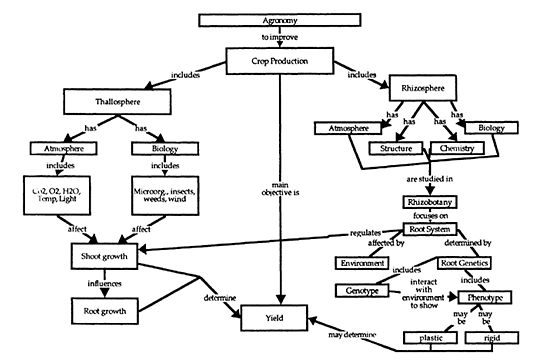
Nonaka and Takeuchi (1995) distinguished between knowledge and information: FIG. 6.8. A concept map showing key concepts involved in a Ph.D. study that is part of the Rhizobotany research group at Cornell University. Reproduced with permission from Matthews, 1995. First, knowledge, unlike information, is about beliefs and commitments. Knowledge is a function of a particular stance, perspective, or intention. Second, knowledge, unlike information, is about action. It is always knowledge “to some end.” And third, knowledge, like information, is about meaning. It is context-specific and relational. (p. 58) (loc: 2010-16)
Another distinction Nonaka and Takeuchi (1995) discussed at some length is tacit contrasted with explicit knowledge. They built on the earlier work of Poly ani (1966) and characterized tacit knowledge as subjective knowledge and explicit knowledge as objective knowledge. The latter is the product of rational thought and may result from empirical studies. Explicit knowledge is knowledge we can easily show (loc: 2022-25)
explain to others, whereas tacit knowledge is knowledge we build up over our lifetime, and often we are at a loss to explain what we believe to others. (loc: 2028-29)
Declarative, Procedural, and Structural Knowledge Declarative knowledge is usually described as knowledge or awareness of some object, event, or idea. Ryle (1949) described this kind of knowledge as knowing that, and contrasts it with procedural knowledge or knowing how. Declarative knowledge is needed to construct procedural knowledge. Jonassen, Beissner, and Yacci (1993) described structural knowledge as that knowledge “that mediates the translation of declarative into procedural knowledge and facilitates the application of procedural knowledge” (p. 4). (loc: 2042-46)
Declarative knowledge is usually described as knowledge or awareness of some object, event, or idea. Ryle (1949) described this kind of knowledge as knowing that, and contrasts it with procedural knowledge or knowing how. Declarative knowledge is needed to construct procedural knowledge. Jonassen, Beissner, and Yacci (1993) described structural knowledge as that knowledge “that mediates the translation of declarative into procedural knowledge and facilitates the application of procedural knowledge” (p. 4). Their book goes on to describe various methods for representing, conveying, and acquiring structural knowledge, including discussion of our work on concept mapping. (loc: 2043-47)
it is more parsimonious to recognize that all knowledge is fundamentally concept-propositional in nature. Furthermore, the distinction between declarative and procedural knowledge is often ambiguous and at times purely arbitrary. (loc: 2049-51)
APPROACHES TO KNOWLEDGE CAPTURE AND UTILIZATION (loc: 2054-55)
Across the years, we have found the personal interview to be the most powerful tool for capturing the knowledge held by an individual or groups of individuals. (loc: 2056-58)
Since the late 1970s, we have used both concept maps and Vee diagrams to design and interpret personal interviews. (loc: 2064)
Detailed instruction on design, execution, and interpretation of interviews can be found in Novak and Gowin (1984). (loc: 2115-16)
In one of our early applications of the process, each staff member of a state school for girls was asked to concept map how they perceived their role in the school. The school was faced with significant budget reductions necessitating some redeployment and reduction in staff. There was a need to become more efficient and to raise the morale of the staff. After staff members completed the concept maps, the maps, with no names or other identification, were taped to the walls of a large meeting room. The staff then spent an hour reviewing all of the concept maps and taking notes. The subsequent discussion led to very productive suggestions on how operations and staff activities could be made more efficient. This led, in time, to substantial improvement in staff morale, student morale, and effectiveness of the school. (loc: 2157-63)
iterative process in companies. maps and submaps (loc: 2182)
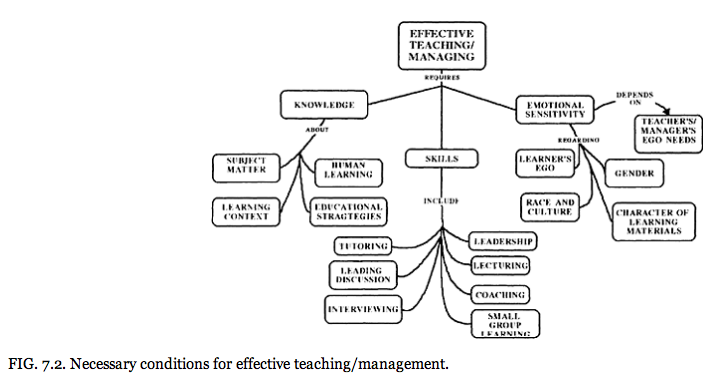
In my experience, most teachers, especially novice teachers, focus on teaching activities and tend to ignore learning activities. They center attention on how to teach a given topic, rather than on what is required for a learner to learn the topic. This stems, in part, from teachers' limited knowledge of the learning process and implications for the teaching process. The long-term consequence for many teachers (especially professors in tertiary schools) is a growing cynicism toward learners and a manifest lack of empathy and emotional support for the struggle learners face in constructing and reconstructing their knowledge frameworks. (loc: 2419-23)
Although preliminary studies suggested that the lessons were successful in effecting student learning (Hibbard & Novak, 1975; Nussbaum & Novak, 1976), the real test of meaningful learning is long-term transfer in facilitation of future learning, even when the context for learning is changed. (loc: 2676-78)
One strategy I have found effective in building trust and encouraging positive peer relationships is concept mapping. When done individually and shared with a group, concept maps can show that all learners see a view of the larger conceptual picture and no one has the perfect map of the domain. The individuals who are more ego secure, or more in need of recognition, will usually offer their maps early in a discussion, but as recognition builds that each person has something to contribute, all members of a class or cooperative learning group will express ideas. (loc: 3561-65)
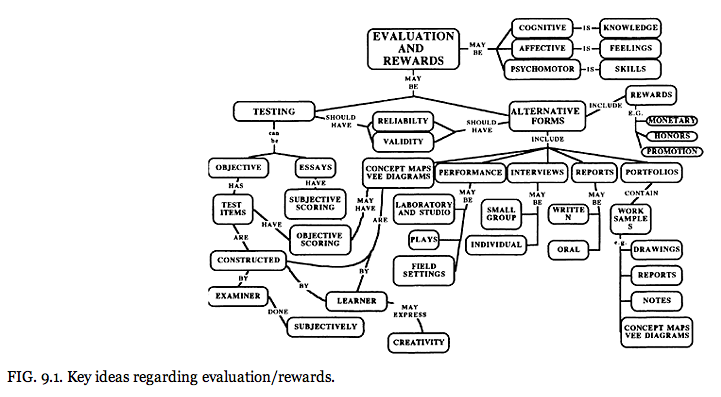
FIG. 9.1. Key ideas regarding (loc: 4047)
how do you teach students to build good cmaps. what kind of moelling and feedback is useful. (loc: 4313)
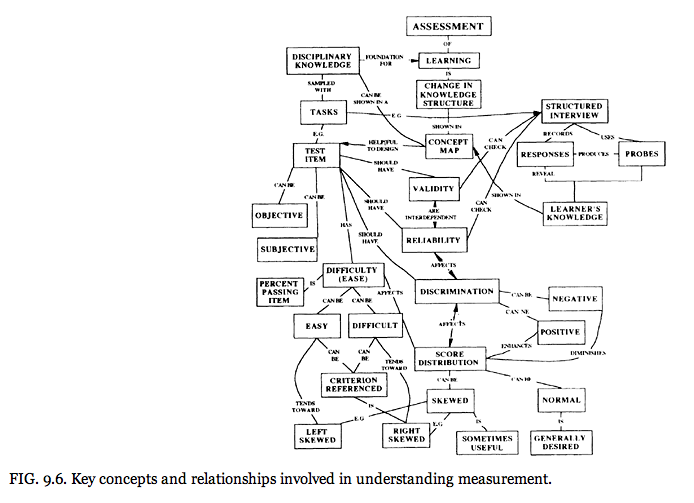
It is now generally agreed among researchers that changes in learners' conceptual frameworks may be most thoroughly evaluated by use of clinical interviews. The problem is that use of interviews for evaluation requires skilled interviewers and relatively costly interviewer time. There remains the problem of the interpretation of the knowledge expressed in interviews; in fact, this problem led our research group to devise the concept mapping tool. We have also developed a variety of scoring algorithms to give numerical scores to concept maps, permitting statistical tests and comparison with other tests (Novak & Gowin, 1984). Scoring a concept map, when scoring criteria have been established, requires only 3 to 10 minutes, depending on the complexity of the map (Ruiz-Primo & Shavelson, 1996). If interviews remain the gold standard for evaluation of cognitive structures, how does the concept map compare? Edwards and Fraser (1983) showed that concept maps constructed by students were as revealing of their knowledge structures as clinical interviews of students. Over the past 2 decades, in dozens of studies by our research group and other researchers, concept maps have been shown to be highly reliable assessment instruments. (loc: 4329-38)
An obvious advantage in using concept maps for evaluation is the ease with which new tests can be devised. By simply adding or subtracting one third or so of the concepts from the list of concepts to be mapped by students, a new test has been devised. As already noted, it is comparatively easy to cover large domains of knowledge with opportunity for creative expression. Although there is some subjectivity in scoring the maps, the great freedom given to individuals to demonstrate their idiosyncratic meanings for the subject matter removes an important source of bias and subjectivity that is present when the test writer chooses the specific content and form in which answers must be selected. (loc: 4338-43)
How To Build a Concept Map 1. Identify a focus question that addresses the problem, issues, or knowledge domain you wish to map. Guided by this question, identify 10 to 20 concepts that are pertinent to the question and list these. Some people find it helpful to write the concept labels on separate cards or Post-its® so that they can be moved around. If you work with computer software for mapping, produce a list of concepts on your computer. Concept labels should be a single word, or at most two or three words. (loc: 5112-16)
2. Rank order the concepts by placing the broadest and most inclusive idea at the top of the map. It is sometimes difficult to identify the broadest, most inclusive concept. It is helpful to reflect on your focus question to help decide the ranking of the concepts. Sometimes this process leads to modification of the focus question or writing a new focus question. (loc: 5116-19)
3. Work down the list and add more concepts as needed. (loc: 5119-20)
4. Begin to build your map by placing the most inclusive, most general concept(s) at the top. Usually there will be only one, two, or three most general concepts at the top of the map. (loc: 5121-22)
5. Next select the two, three, or four subconcepts to place under each general concept. Avoid placing more than three or four concepts under any other concept. If there seem to be six or eight concepts that belong under a major concept or subconcept, it is usually possible to identify some appropriate concept of intermediate inclusiveness, thus creating another level of hierarchy in your map. (loc: 5122-25)
6. Connect the concepts by lines. Label the lines with one or a few linking words. The linking words should define the relationship between the two concepts so that it reads as a valid statement or proposition. The connection creates meaning. When you hierarchically link together a large number of related ideas, you can see the structure of meaning for a given subject domain. (loc: 5126-28)
7. Rework the structure of your map, which may include adding, subtracting, or changing superordinate concepts. You may need to do this reworking several times, and in fact this process can go on indefinitely as you gain new knowledge or new insights. This is where Post-its® are helpful, or better still, computer software for creating maps. (loc: 5129-31)
8. Look for crosslinks between concepts in different sections of the map and label these lines. Crosslinks can often help to see new, creative relationships in the knowledge domain. (loc: 5132-33)
9. Specific examples of concepts can be attached to the concept labels (e.g., golden retriever is a specific example of a dog breed). (loc: 5134-35)
10. Concept maps could be made in many different forms for the same set of concepts. There is no one way to draw a concept map. As your understanding of relationships between concepts changes, so will your maps. (loc: 5136-37)
Procedures for Teaching VEE Diagramming 1. Select a laboratory or field event (or object) that is relatively simple to observe and for which one or more focus questions can be readily identified. Alternatively, a research paper with similar features can be used after all students (and the teacher) have read it carefully. (loc: 5138-41)
2. Begin with a discussion of the event or objects being observed. Be sure that what is identified is the event(s) for which records are made. Surprisingly, this is sometimes difficult. (loc: 5142-43)
3. Identify and write out the best statement of the focus question(s). Again, be sure that the focus question(s) relate to the events or objects studied and the records to be made. (loc: 5144-45)
4. Discuss how the questions serve to focus our attention on the specific features of the events or objects and require that certain kinds of records be obtained if the questions are to be answered. Illustrate how a different question about the same events or objects would require different records to be made (or a different degree of precision). (loc: 5145-48)
5. Discuss the source of our questions, or our choice of objects or events to be observed. Help students to see that, in general, our relevant concepts, principles, or theories guide us in choosing what to observe and what questions to ask. (loc: 5149-50)
6. Discuss the validity and reliability of the records. Are they facts (i.e., valid, reliable records)? Are there concepts, principles, and theories that relate to our record-making devices that assure their validity and reliability? Are there better ways to gather more valid records? (loc: 5151-53)
7. Discuss how we can transform our records to answer our questions. Are certain graphs, tables, or statistics useful transformations? (loc: 5153-54)
8. Discuss the construction of knowledge claims. Help students to see that different questions could lead to gathering different records and performing different record transformations. The result may be a whole new set of knowledge claims about the source events or objects. (loc: 5155-57)
9. Discuss value claims. These are value statements such as X is better than Y, or X is good, or we should seek to achieve X. Note that value claims should derive from our knowledge claims, but they are not the same as knowledge claims. (loc: 5158-60)
10. Show how concepts, principles, and theories are used to shape our knowledge claims and may influence our value claims. (loc: 5160-61)
11. Explore ways to improve a given inquiry by examining which element in the Vee seems to be the weakest link in our chain of reasoning, that is, in the construction of our knowledge and value claims. (loc: 5162-63)
12. Help students see that we operate with a constructivist epistemology to construct claims about how we see the world working, and not an empiricist or positivist epistemology that proves some truth about how the world works. (loc: 5164-65)
13. Help students see that a world view is what motivates or guides the investigator in what he or she chooses to try to understand, and controls the energy with which he or she pursues the inquiry. Scientists care about value and pursue better ways to explain rationally how the world works. Astrologers, mystics, creationists, and others do not engage in the same constructivist enterprise. (loc: 5166-69)
14. Compare, contrast, and discuss Vee diagrams made by different students for the same events or objects. Discuss how the variety helps to illustrate the constructed nature of knowledge. (loc: 5169-71)
Achterberg, C.L. (1986). The meaning of food and nutrition in families with young children: A study of social cognition. Unpublished doctoral thesis, Cornell University, Ithaca, NY. Achterberg, C.L., Novak, J.D., & Gillespie, A.H. (1985). Theory-driven research as a means to improve nutrition education. Journal of Nutrition Education, 17(5), 179–184. Alaiyemola, F.F., Jegede, O.J., & Okebukola, P.A.O. (1990). The effect of a metacognitive strategy of instruction on the anxiety level of students in science classes. International Journal of Science Education, 72(1), 95–99. American Association of University Women. (1995). Growing smart: What's working for girls in schools. Washington, DC: AAUW. American Psychological Association. (1995). Learner centered psychological principles: Guidelines for the teaching of educational psychology in teacher education programs. Newsletter for Educational Psychologists, 19(1):4–5; 8. Anderson, J.R. (1990). The adaptive character of thought. Hillsdale, NJ: Lawrence Erlbaum Associates. Anderson, J.R. (1983). The architecture of cognition. Cambridge, MA: Harvard University Press. Argyris, C., & Schön, D.A. (1978). Theory in practice: Increasing professional effectiveness. San Francisco: Jossey-Bass. Arzi, H. (in press). More than walls, benches and widgets: Enhancing science education through laboratory environments. In Fraser, B.J., & Tobin, K.G. (Eds.), The International Handbook of Science Education. Dordrecht, Netherlands: Kluwer. Ausubel, D.P. (1962). A subsumption theory of meaningful verbal learning and retention. Journal of General Psychology, 66, 213–224. Ausubel, D.P. (1963). The psychology of meaningful verbal learning. New York: Grune & Stratton. Ausubel, D.P. (1968). Educational psychology: A cognitive view. New York: Holt, Rinehart & Winston. Ausubel, D.P., Novak, J.D., & Hanesian, H. (1978). Educational psychology: A cognitive view (2nd Ed.). New York: Holt, Rinehart, & Winston. Baranga, C.B.A. (1990). Meaningful learning of creative writing in fourth grade with a word processing program integrated in the whole language curriculum. Unpublished masters thesis. Cornell University, Ithaca, NY. Bauer, L., & K.Borman. (1988). A review of educational foundations courses offered in U.S. colleges and universities. Unpublished manuscript, University of Cincinnati. Belenky, M.F., Clinchy, B., Goldberger, N.R., & Tarule, J.M. (1986). Woman's ways of knowing: The development of self, voice, and mind. New York: Basic Books. Benbow, C.P., & Stanley, J.C. (1982). Consequences in high school and college of sex differences in mathematical reasoning ability: A longitudinal perspective. American Educational Research Journal, 14, 15–71. Berne, E. (1964). Games people play. New York: Grove Press. Best, R. (1983). We've all got scars: What boys and girls learn in elementary school. Bloomington: Indiana University Press. Bierlein, L.A., & Mulholland, L.A. (1994). The promise of charter schools. Educational Leadership, 52, 34–35, 37–40. Bloom, B.S. (1956). Taxonomy of educational objectives—The classification of educational goals, Handbook I: Cognitive domain. New York: David McKay. Bloom, B.S. (1968). Learning for mastery. UCLA Evaluation Comment, 1(2), 1. Bloom, B.S. (1976). Human characteristics and school learning. New York: McGraw-Hill. Bloom, B.S. (1981). All our children learning: A primer for parents, teachers, and other educators. New York: McGraw-Hill. Bonner, J.T. (1962). The ideas of biology. New York: Harper. Brandt, R. (1993). Overview: A consistent system. Educational Leadership, 51(1), 7. Bretz, S. (1994). Learning strategies and their influence upon students' conceptions of science literacy and meaningful learning: The case of a college chemistry course for non-science majors. Unpublished doctoral thesis. Cornell University, Ithaca, NY. Bridges, E.M. (1986). The incompetent teacher: The challenge and the response. Philadelphia, PA: Falmer Press. Bridges, E.M. (1992). The incompetent teacher: Managerial responses. Philadelphia, PA: Falmer Press. Bronfenbrenner, U., & Ceci, S.J. (1994). Nature-nurture reconceptualized in developmental perspective: A bioecological model. Psychological Review, 101(4), 568–586. Brown, A.L. (1994). The advancement of learning. Educational Researcher, 23(8), 4–12. Brown, J.S., Collins, A., & Duguid, P. (1989). Situated cognition and the culture of learning. Educational Researcher, 18(1), 32–42. Bush, V. (1945). Science: The endless frontier. Washington, DC: U.S. Government Printing Office. Cafias, A.J., & Ford, K. (1992). An environment for collaborative knowledge building. Paper presented at the Workshop on the Technology and Pedagogy for Collaborative Problem Solving as a Context for Learning, Toronto, June. Cañas, A.J., Ford, K.M., & DeBessonet, C. (1993, April). Intelligent support for collaborative modeling. Proceedings of the Sixth Florida Artificial Intelligence Research Symposium, FLAIRS '93. Fort Lauderdale, FL. Cannon, W.B. (1932). The wisdom of the body. New York: Norton. Carey, S. (1985). Conceptual change in childhood. Cambridge, MA: MIT Press. Chi, M.T.H. (1983). Network representation of a child's dinosaur knowledge. Developmental Psychology, 19(1), 29–39. Ciery, D. (1994). Element 110 is created, but who spotted it first? Science, 266, 1479. Commoner, B. (1971). The closing circle: Nature, man, and technology. New York: Knopf. Crosby, P.B. (1992). The eternally successful organization. New York: Mentor Books. Cullen, J.P., Jr. (1983). Concept learning and problem solving: The use of the entropy concept in college teaching. Unpublished doctoral thesis. Cornell University, Ithaca, NY. Dethier, V.G. (1962). To know a fly. San Francisco: Holden-Day. Donaldson, M.C. (1978). Children's minds. New York: Norton. Drucker, P.F. (1993). Post-capitalist society. New York: Harper. Dunn, B.R., Novak, J.D., Hill, R., MacQueen, K., & Wagner, L. (1989). The measurement of knowledge integration using EEG frequency analysis. Paper presented at the 1989 annual meetings of the American Educational Research Association, San Francisco, March. Dunn, J. (1987). Understanding feelings: The early stages. In J.Bruner & H.Haste (Eds.), Making Sense (pp. 26–40). New York: Methuen. Edmondson, K.M., & Novak, J.D. (1993). The interplay of scientific epistemological views, learning strategies, and attitudes of college students. Journal of Research in Science Teaching, 32(6), 547–559. Educational Policies Commission. (1961). The central purpose of American education. Washington, DC: National Education Association. Edwards, J., & Fraser, K. (1983). Concept maps as reflectors of conceptual understanding. Research in Science Education, 13, 19–26. Farrell, W.C., Johnson, J.H., Jones, C.K., & Sapp, M. (1994). Will privatizing schools really help inner-city students of color? Educational Leadership, 52(1), 72–75. Fedock, P.M., Zambo, R., & Cobern, W.W. (1996). The professional development of college science professors as science teachers. Science Education, 80(1), 5–19. Feldsine, J.E., Jr. (1987). Distinguishing student's misconceptions from alternative conceptual frameworks through construction of concept maps. In J.D.Novak (Ed.), Proceedings of the second International Seminar on Misconceptions and Educational Strategies in Science and Mathematics. Ithaca, NY: Cornell University. Feynman, R.P. (1985). “Surely you must be kidding, Mr. Feynman”: Adventures of a curious character. New York: Norton. Flavell, J.H. (1985). Cognitive Development (2nd ed.). Englewood Cliffs, NJ: Prentice-Hall. Ford, K.M., Cañas, A., Jones, J., Stahl, H., Novak, J.D., & Adams-Weber, J. (1991). ICONKAT: An integrated constructivist knowledge acquisition tool. Knowledge Acquisition, 3, 215–236. Fraser, K. (1993). Theory based use of concept mapping in organizational development: Creating shared understanding as a basis for the cooperative design of work changes and changes in working relationships. Unpublished doctoral dissertation, Cornell University, Ithaca, NY. Freire, P. (1970). Pedagogy of the oppressed. New York: Searbury Press. Freire, P. (1985). The politics of education: Culture, power and liberation. South Hadley, MA: Bergin and Garvey. Fromm, E. (1955). The Sun society. New York: Rhinehart & Company. Fromm, E. (1973). The art of loving. New York: Avon Books. (Original work published in 1956) Fuata'i, K. (1985). The use of Vee maps and concept maps in the learning of form five mathematics in Samoa College, Western Samoa. Unpublished masters thesis, Cornell University, Ithaca, NY. Gabel, D. (1994). Learning: Alternative conceptions. In D.L.Gabel (Ed.), Handbook on research in science teaching (pp. 177–210). New York: Macmillan. Gage, N.L. (1963). Handbook of research on teaching: A project of the American Educational Research Association. Chicago: Rand McNally. Gamoran, A., Nystrand, M., Berends, M., & LePore, P.C. (1995). An organizational analysis of the effects of ability grouping. American Educational Research Journal, 32(4), 687–715. Gardner, H. (1983). Frames of mind: The theory of multiple intelligences. New York: Basic Books. Gardner, H. (1993). Creating minds. New York: Basic Books. Gates, B. (1996). The road ahead. New York: Penguin. Gazzaniga, M. (1989). Mind matters: How mind and brain interact to create our conscious lives. Boston: Houghton Mifflin. Gazzaniga, M. (Ed.). (1995). The cognitive neurosciences. Cambridge, MA: MIT Press. Georgi, H. (1996). Cited in Glantz, J. (1996). How not to pick a physicist? Science, 274, 710–712. Geraci, B. (1995). Local decision making: A report from the trenches. Educational leadership, 35(4), 50–52. Gerber, J.A. (1992). Promoting excellence in elementary school teaching: Theory driven practitioners. Unpublished doctoral dissertation, Cornell University, Ithaca, NY. Getzelsz, J.W., & Jackson, P.W. (1962). Creativity and intelligence: Explorations with gifted students. New York: Wiley. Gilligan, C. (1982). In a different voice: Psychological theory and women's development. Cambridge, MA: Harvard University Press. Glanz, J. (1996). How not to pick a physicist? Science, 274, 710–712. Glasser, W. (1994). The control theory manager. New York: HarperCollins. Goleman, D. (1995). Emotional intelligence: Why it can matter more than I.Q. New York: Bantam. Gonzales, F.M., & Novak, J.D. (1996). Aprendizaje significativo: Tecnicas y aplicaciones. Madrid: Ediciones Pedagogicas. Goodlad, J.I. (1984). A place called school: Prospects for the future. New York: McGraw-Hill. Gould, S.J. (1981). The mismeasure of man. New York: Norton. Gowin, D.B. (1970). The structure of knowledge. Educational Theory, 20(4), 319–328. Gubrud, A.R., & Novak, J.D. (1973). Learning achievement and the efficiency of learning the concept of vector addition at three different grade levels. Science Education, 57(2), 179–191. Guilford, J.P. (1959). Three faces of intellect. American Psychologist, 14, 469–479. Guilford, J.P., & Christensen, P.R. (1973). The one-way relationship between creative potential and IQ. Journal of Creative Behavior, 7(4), 247–252. Gurley-Dilger, L.I. (1982). Use of Gowin's Vee and concept mapping strategies to teach responsibility for learning in high school biological sciences. Unpublished doctoral thesis, Cornell University, Ithaca, NY. Hagerman, H. (1966). An analysis of learning and retention in college students and the common goldfish (Carassius auratus, Lin). Unpublished doctoral thesis, Purdue University, Lafayette, IN. Halpern, D.E. (1989). Thought and knowledge: An introduction to critical thinking (2nd ed.). Hillsdale, NJ: Lawrence Erlbaum Associates. Hamel, G., & Prahalad, C.K. (1994). Competing for the future. Boston: Harvard Business School Press. Hamilton, W., Sir. (1853). Discussions on philosophy (2nd ed.). London: Longman, Brown, Green. Hammer, M., & Champy, J. (1993). Reengineering the corporation: A manifesto for business revolution. New York: HarperCollins. Hangen, J. (1989). Educational experience as a factor in bulimia and anorexia. Unpublished masters thesis, Cornell University, Ithaca, NY. Hanushek, E.A. (1981). Throwing money at schools. Journal of Policy Analysis and Management, 1, 19–41. Hanushek, E.A. (1989). The impact of differential expenditures on school performance. Educational Researcher, 18(4), 45–65. Harris, T.A. (1969). I'm OK, you're OK: A practical guide to transactional ana <You have reached the clipping limit for this item> (loc: 5172-5640)