Media pedagogy panel
Amanda Parris
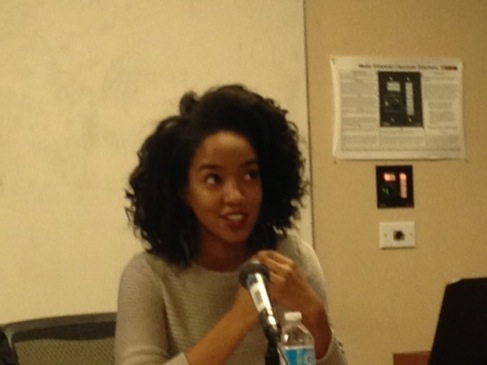
Lost Lyrics: Started with visiting global youth conferences in Venezuela and Brazil, very encouraged by spirit of “doing things”, even though local communities had no money. Wanted to do something in the spirit of the “hip-hop culture” (of making something out of what other people thinks is nothing).
Working with an organization created an after-school program, curriculum was determined together with the students - they would be very frank in telling whether something was interesting or not. Turned out to be too political for that organization, ended up continuing the work independently. Believe that there is a lot of richness in those communities, diaspora culture, history etc.
Experimenting with Twitter hashtags. Example of a presentation on blackness - discussing etymology of the word, historical ads and depictions, movements that have attempted to reclaim the notion of blacknesses, love using music videos. Many things that cannot easily be communicated in an academic article.
Obsessed with documenting, cognizant of the fact that a lost of our histories were lost because other people were using our histories. We're not so good at using the raw media, we're sitting on a lot of footage. But our kids are part of that documentation process - teachers have cameras, students have cameras - what is it like to be in front of the camera, behind the camera, what are the responsibilities that follow, etc. Promotional video
Bea Meglio
TDSB teacher
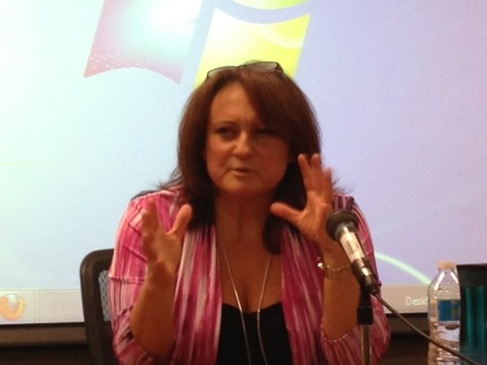
Media was almost lost in the dark 90's in Ontario, strong lobby of grasroots media educators that enabled a pretty comprehensive media program. Media studies expectations from kindergarten to grade 12. A system of professional development to support teachers.
A few years ago, the focus changed from consumption to creators. Today, production tools are very accessible, social media has exploded. Sharing.
We shape our tools, and those tools shape us.
The sharing has led us to challenge conceptions of who we are, concepts of privacy, relationships with each other, relationships with corporations. Media studies is about thinking critically, about asking questions.
Asking questions.
- Why can't I turn my head when Honey Bo Bo is on
- Why don't anyone on TV look like me
- Or why do everyone on TV look like me
Teaching media/taking media courses in itself is an act of social justice - media studies is social justice.
Michael Hoechsmann
Associate professor at Lakehead University
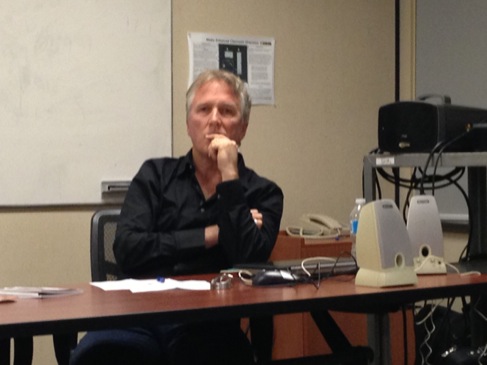
Project: Youth Digital Media Ecologies in Canada Mapping youth media production context in three Canadian cities
Database of organizations that work on youth literacy, digital media. Map it, what media, what forms of outcome as well as who produce them?
The idea of a “scene”, like a music scene, what is the media scene? A conglomeration through which people and capital flows. We want to say that it is capacity building and empowerment, but it's very hard to show that this is the fact. Need longitudinal research to show this, but the organizations are too busy with day-to-day survival, running programs, and fundraising.
Historic centre of the city is where projects are clustered. Cities with urban poverty at the edges, but organizations tend to be clustered around the historical centre (should also map schools, and other institutions). Enables us to start asking questions. There is a nervousness around assessment schemes, and what it means for youth media organizations, but there is also a curiosity… What does happen to youth that have been involved in a youth project… What is the life impact of a youth media project?
Social capital, related to the resources required, and the kind of resource sharing that might exist.
History, tracking the establishment of organizations over time. We researched about 60 organizations, only one of them existed before 1990, 42% established 1990-2000.
Tries to map to what extent the organizations collaborate. 25% of organizations share all their resources, 48% share staff members, 44% share funding, 67% share partnered development. The kind of media produced: 7% interactive games, 59% narrative fiction, etc.
One finding: journalism has diminished in its role, creative storytelling has taken its place (early impression).
It's a sector that can move much more quickly than schools.
The project should be done by May, and all the cities (including Toronto) will be there.
Discussion
Entrypoints - how do you engage youth that is not necessarily predisposed to social justice (Bari)
- Lost Lyrics accepts anyone who wants to join, earlier we were more passionate about being defined as an advocacy organization. Most of our students are 11 years old, so most people don't have strong political ideas, but we want them to be open to learning. In addition, there isn't one way to be an activist, or one particular future, the concept of “selling out”. Rather: what kind of people are we sending back into the world. If you're a hair dresser, do you understand the social history of hair, the cultural meaning of hair in the African community, where your hair products come from, etc.
- Braxton (Lost Lyrics student): opened up my mind, before I had a lot of experiences before, but no way of engage with it, no words. Lost Lyrics was my foundation for learning. This is a safe space, no right way or wrong way, open your mind.
- Michael: Audience - if you are producing media and it's going to go somewhere else, someone else will listen to it. Young people to young people can be very frivolous, but youth to adult audience, teacherly, young people say back what adults want them to say. Politically correct, etc. Hybrid audience, young people with their peers and adults - result: people got really serious, elevated their game to serious social issues of the day. Experience with Young People's Press.
Young people's idea of news. Expectations placed on you from outside, and that you place on yourself, are they manageable? (Avery)
- Amanda: When we began, we didn't have a clear plan, different from many other organiztions. We first entered the community, no expectation, stumbled into the creation of a program. Very free. Did some of the right things and some of the wrong things. Identified some of the key stakeholders (students, their families). Held village cypher(?) - concept from hip-hop, everyone is giving energy and participating in exchange. Brought together key stakeholders, later started inviting funders. Students, parents, some teachers. Share with them what we'd been doing, ask them for critical feedback. They were very direct in telling us what we should be doing. Amazing, but also a lot of pressure. Students staid for years, got very invested in it. “You should be a school, you should be global, etc”.
- Avery: How do you negotiate expectations in relationship to the school system?
- Amanda: Gaining legitimacy, largest challenge - often “belittled” in being “the hip-hop program”, the “culturally relevant program” - assumption that you can do your work in 45 minutes, come in once, and it'll all be done. Wanting to get the resources of working with schools (income), but limitations. Idea of gaining some level of accreditation with the school system, how much freedom would we have to give up.
- Braxton: We use media every day in class, students are so engaged, we love to learn - being able to learn through your culture is amazing. Students are driving the curriculum, and media is a good gateway to that.
How do we “mainstream” media studies - integrating it into all classes (Saskia)
- Bea: In K-6, there is no time to cover (negative) → media literacy becomes very cross-curricular (positive).
What do you see as entry points that can enable transformative learning experiences (Saskia)
- The justice component is the critical component, can't be forgotten. Some things need to stay on the outside, and as educators we need to know about what's available, so that we can connect students to opportunities, but something about institutionalizing practice makes me nervous.
- Focusing on activists tends to focus on all the bad things in the world - but there's a reason why we're focusing on this, because we want change. How do we understand media as part of a larger system, in connection with school, with police… Why does public schools even want to be transformative, they are maintaining a system. Examining your own personal biases, what are you afraid that the students are going to hear about?
How to approach topics of racialization, feel like I'm putting my students of color in the spotlight. Because I didn't grow up as a person of color, I don't have access to that experience, but I want to address it in an authentic way?
- Amanda: I think everyone is racialized, we have to recognize that - even white people. Recognize that your social location might have been racialized in an invisible way is very powerful. Shakespeare wasn't your experience either, but you can teach it - so just do the work. There is a wide realm of work in critical race theory which people think is too complex for a K-6 group, but I totally disagree - it can be remixed and presented. There is an incredible amount of resources available, gifts, memes… Don't pretend to know anything if you don't, it's OK to say that you don't know. We can learn together, vulnerable and humble position, really appreciated by students.
Your best sales people are teachers, there are some amazing teachers out there (Lesley)
What can we do and what can't we, what's radical and what's possible? Easy as teachers to become “ghettoized”, don't tell anyone what you're doing, don't run it through the principal, keep it off the radar. Principals are very sensitive to criticism, want stability and safety. Outside organizations have a lot more flexibility. Very difficult for a media stuies teacher to teach well, and not have the students become radicalized. If you are teaching social justice, don't make the school the target, it's a bit safer. (Neil)
- Amanda: It's where you have to be strategic.

